2025

Seoul Oasis

Enterprise ERP & Sales Force Automation Platform

Enterprise ERP & Sales Force Automation Platform

Overview

Overview

This project connected two products into one business: a web-based ERP that runs internal operations, and a mobile Sales Force Automation (SFA) app that puts the same operational intelligence into the hands of field sales reps. Instead of designing them as separate tools, I approached them as one ecosystem — a rep's order placed at a customer's door should be visible to a warehouse manager and a finance controller within seconds, not by end of day.

My role spanned the full process: stakeholder research, information architecture, user flows, wireframes, high-fidelity UI, a shared design system across web and mobile, prototyping, and developer handoff.

Core problem

Core problem

The organization was running on multiple disconnected third-party systems layered on top of manual processes — separate tools for sales, inventory, accounting, and customer management that didn't talk to each other. Field sales reps recorded orders by hand, then re-entered them later, which meant delays, duplicate data entry, inventory mismatches, and management flying blind on what was actually happening outside the office.

Goal: Replace the patchwork with one connected ecosystem — a web ERP for internal operations and a mobile SFA app for the field — sharing the same real-time data, so every department is working off the same picture.
Research Highlights

I had detailed meetings with stakeholders across the business — from sales and warehouse to finance and management — to understand how each team's existing workflow actually worked. A few findings came up repeatedly and shaped most of the decisions that followed:

  • Speed in the field is non-negotiable. Reps needed to place an order in minutes, standing in front of a customer — not after driving back to the office.

  • Visibility beats reporting. Managers didn't want another report; they wanted to see field activity as it happened.

  • Reconciliation was eating finance's week. Manual matching of records across systems was the single biggest time sink for finance.

  • Stock data had to be trustworthy. Warehouse teams needed one accurate number, not three conflicting ones.

  • Executives wanted answers, not spreadsheets. A dashboard that surfaced insight, not just data.

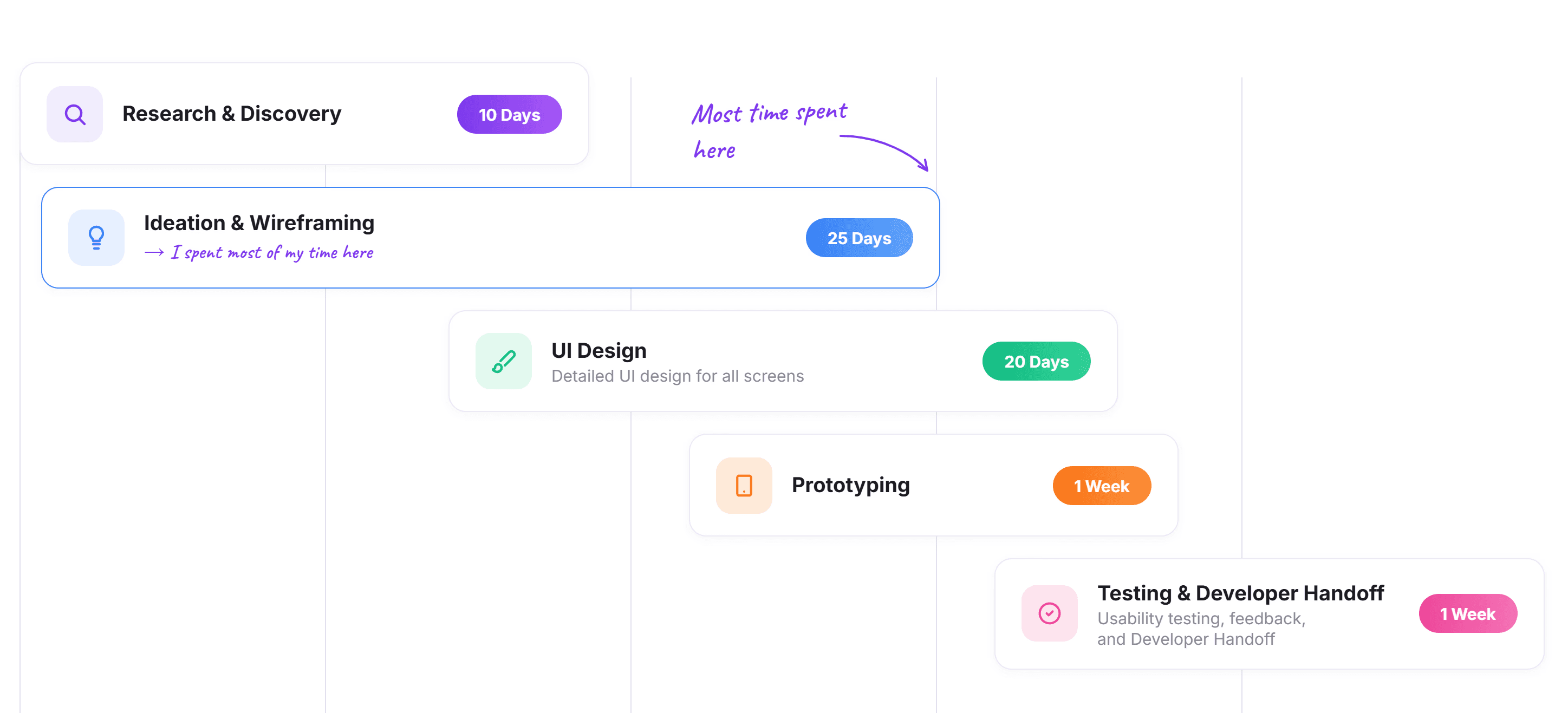
Design Process

Discover → Research → Information Architecture → User Flows → Low-Fidelity Wireframes → High-Fidelity UI → Interactive Prototypes → Usability Testing → Iterate → Developer Handoff

A single, shared design system carried color, typography, grid, and components across both the web and mobile products — buttons, cards, tables, forms, modals, status indicators, and charts — so the experience felt like one product family, not two separately built apps, while also speeding up development.

Research Highlights

I had detailed meetings with stakeholders across the business — from sales and warehouse to finance and management — to understand how each team's existing workflow actually worked. A few findings came up repeatedly and shaped most of the decisions that followed:

  • Speed in the field is non-negotiable. Reps needed to place an order in minutes, standing in front of a customer — not after driving back to the office.

  • Visibility beats reporting. Managers didn't want another report; they wanted to see field activity as it happened.

  • Reconciliation was eating finance's week. Manual matching of records across systems was the single biggest time sink for finance.

  • Stock data had to be trustworthy. Warehouse teams needed one accurate number, not three conflicting ones.

  • Executives wanted answers, not spreadsheets. A dashboard that surfaced insight, not just data.

Design Process

Discover → Research → Information Architecture → User Flows → Low-Fidelity Wireframes → High-Fidelity UI → Interactive Prototypes → Usability Testing → Iterate → Developer Handoff

A single, shared design system carried color, typography, grid, and components across both the web and mobile products — buttons, cards, tables, forms, modals, status indicators, and charts — so the experience felt like one product family, not two separately built apps, while also speeding up development.

The Solution - Two Products, One Ecosystem

The Solution - Two Products, One Ecosystem


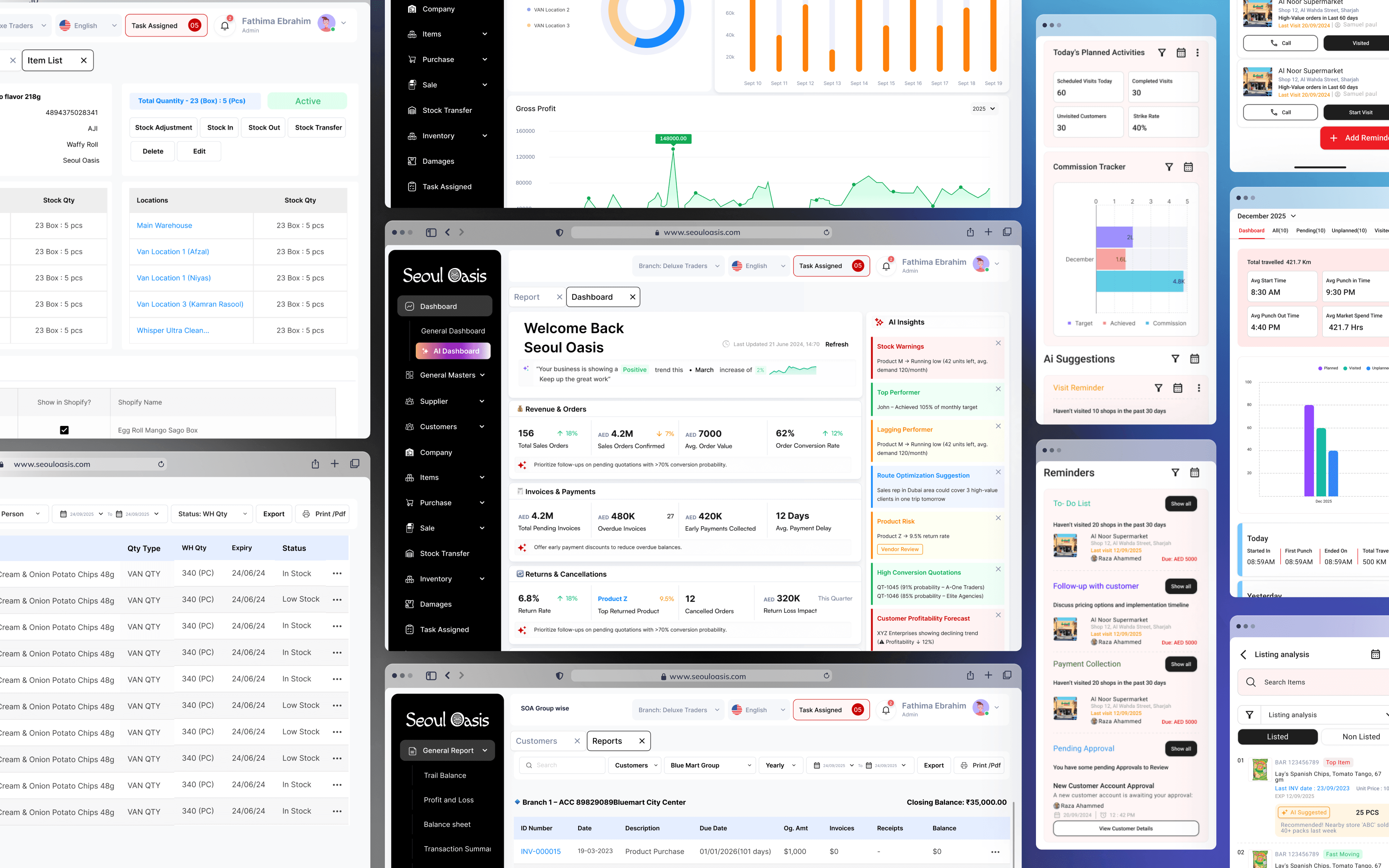
ERP (Web)
— Dashboard with AI-powered analytics, CRM, Sales, Purchase, Inventory/Warehouse, Accounting, HRMS, Payroll, Assets, Approvals, Reports, Admin. The dashboard surfaces AI-driven insights — trends, anomalies, and forecasts — so executives get a head start on decisions instead of a pile of spreadsheets to interpret themselves.

SFA (Mobile) — Visit planning, GPS check-in, route optimization, order taking, live stock visibility, collections, customer history, promotions, and offline mode with automatic sync. Access is role-based across Warehouse Gatekeeper, Manager, and Sales Person — each sees a tailored view built around their day, not a one-size-fits-all app.

The core loop: A rep checks in at a customer site → places an order on the spot → it syncs to the ERP → a manager sees it live, and the warehouse sees updated stock. What used to be a next-day report becomes a real-time event.

Key UX Decisions

Key UX Decisions

Business Impact

Business Impact

  • Executives moved from raw reports to AI-generated insights and forecasts

  • Faster order processing and less manual data entry

  • More accurate, trustworthy inventory data across warehouse and sales

  • Real-time visibility into field sales activity for managers

  • Faster approval cycles with clear status tracking

  • Significantly reduced manual reconciliation time for finance

  • One consistent experience across desktop and mobile — no relearning between platforms

Key Takeaway

Key Takeaway

Enterprise complexity and usability aren't in conflict when research stays continuous and the design system is shared. Connecting ERP and SFA into a single ecosystem — instead of treating them as separate products — turned scattered, delayed, third-party-fragmented data into one real-time, organization-wide view. That's the difference between a tool people tolerate and a system they actually run their business on.

Have a project idea in mind? Let’s chat about how we can bring it to life— virtually, from anywhere in the world!

Have a project idea in mind? Let’s chat about how we can bring it to life— virtually, from anywhere in the world!

Create a free website with Framer, the website builder loved by startups, designers and agencies.